
Author: Emily Howard

Family Culture
Alyssa Sullivan is a second-generation painting contractor out of Tacoma, Washington. This month, she sat down with Emily Howard to talk about stepping in as the head of Sullivan Painting Services, the challenges of delegation, and the importance of a family culture. Emily Howard: Tell me about Sullivan Painting Services.Alyssa Sullivan: We are a family-owned company in Tacoma, Washington, founded by my dad in 1983. We have about 15 employees and do a little residential work, but we are mostly commercial.I started working with my dad in 2016, but in 2021, he had a motorcycle accident, and I took over.During the first few weeks, we weren’t sure he was going to make it. My mom, my husband, and I were taking turns driving to Portland, so he always had one of us with him. He's really lucky to be alive, and we're lucky to still have him.I remember I was estimating our largest project ever in the lobby of the hospital.Taking things over was definitely an experience. I got so much support from the CPIA and my peer group, so I can't recommend or sing their praises high enough. EH: Did growing up in the painting industry make you want to go into paint contracting? AS: It’s kind of funny because my mom is a paint store manager and my dad had the painting company, but I was a manager at Starbucks. My dad always said that the company was there if I wanted it, but I was having fun doing my own thing.In 2017, he decided he needed a break and wanted some separation. He asked me to come on full-time, so I left Starbucks to come work for him. The first years were tricky working for a family, especially your father.As time went on, things went more smoothly. He was in the office less, and I had more control. Then, 2022 was my first full year taking over, and we had our largest job ever. It ended up being our largest revenue year ever. EH: What are some of your favorite projects you’ve done over the years? AS: Our largest job was the Muckleshoot Indian Tribe Community Center, and we won an Elevation Award from the CPIA for that project. We’ve done multiple Boys and Girls Clubs, and just completed a building for the Washington State Fairgrounds. We also did an old naval station that was converted into a very high-end residential house. That was really cool. EH: What are some of the biggest challenges you’ve faced in your role over the last five years? AS: One of my biggest challenges is finding new employees who match our culture. I say we're a family because we’re fairly small and everyone here treats each other like family.That dynamic doesn’t allow you to just bring anyone in and hope that they fit without disrupting the culture.Another challenge I have is figuring out how to let go of some of my control and delegate. EH: I love that you call it family. How did you all end up with such a close culture? My dad started it, and then I kept it. That was a big thing at Starbucks, too. Also, we are a smaller company, and we have to rely on each other. That’s something I try to instill in everyone because even something simple like calling out sick can absolutely mess up everyone else’s game plan for the day. We pay attention to how our actions will affect other people.That culture has really helped with retention, but it does make it harder to find new people. We are growing, but I'm not willing to grow and sacrifice our family dynamic. EH: What does the future look like for you? AS: I’d like to bring in more office staff to help with estimating and project management. Right now, I have someone who helps me, but he's also partly in the field, so a lot of those duties still require me.Also, I’m pregnant with my first child, so it's definitely going to get interesting. I don't plan on taking a lot of time off for maternity leave because I'm such a control freak, but I do want to build the office staff and let go of some control of estimating and project management. Relying on other people is probably one of my biggest challenges.Also, maintaining our family culture might lead to a growth pace that others think is slow, but I definitely want to maintain our integrity and our quality over quantity. EH: Did you join the CPIA as soon as you took over the company? How has it helped you over the last five years? AS: My dad joined, and I think he only had one meeting with the peer group, and then his accident happened. Then I saw one of the CPIA newsletters, and I thought the association could really help me.I absolutely feel that they all took me under their wing. Even now, I still haven't completed my buyout process, and they've been so helpful with that. My peer group also knows the things I tend to drag my feet on because they aren’t my priority. When I get busy with other aspects of the business, they hold me accountable to those things, which is something that I absolutely need.I talk to people in my peer group every single day. Sometimes it’s just to vent to people who understand and have the same exact problems. They're not always on the same scale, but they are the same problems. My peer group keeps me sane.

OBBBA: Key Tax Opportunities for Painting Contractors in 2026
The One Big Beautiful Bill Act (OBBBA), signed into law on July 4, 2025, delivers substantial tax relief by making permanent many provisions from the 2017 Tax Cuts and Jobs Act while adding new incentives to encourage U.S. investment and business growth. For painting contractors—often operating as pass-through entities with heavy reliance on vehicles, equipment, skilled labor, and project-based cash flow, this legislation offers immediate opportunities to improve liquidity, accelerate equipment upgrades, and reduce overall tax burdens amid rising material and labor costs.Permanent 20% Qualified Business Income (QBI) Deduction (Section 199A) The Qualified Business Income Deduction was signed into law as part of the Tax Cuts and Jobs Act. It allows owners of eligible entities to deduct up to 20% of their qualified business income for tax purposes (subject to limitations and phase-outs). This can lower the effective federal tax rate for these business owners in the highest tax bracket to 29.6% from 37%. While originally set to expire at the end of 2025, the OBBBA made this deduction “permanent”. Many painting businesses qualify as non-Specified Service Trade of Businesses (SSTB), thus allowing them to capitalize on this deduction. There are numerous limits and phase-outs, so it’s important to review how this applies to your tax strategy, including the current owner compensation structure, to maximize this benefit while maintaining reasonable compensation under the IRS guidance. 100% Bonus Depreciation and Expanded Section 179 Expensing OBBBA permanently restored accelerated depreciation or expensing for qualified property (e.g., paint sprayers, scaffolding, lifts, pressure washers, trucks, trailers, and certain building improvements). These rules allow for immediate full write-offs of major purchases, freeing up cash for fleet modernization, safety gear upgrades, or technological investments. Business Interest Deduction Relief (Section 163(j))The limitation reverts to an EBITDA-based calculation, adding back depreciation and amortization in coming up with Adjusted Taxable Income. This benefits contractors financing vehicles, equipment, or shop expansions, increasing deductible interest and reducing carryforwards—especially helpful for capital-intensive operations with loans for growth. SALT Cap Increase and PTETSince the Tax Cuts and Jobs Act was signed into law, the deductibility of State and Local Taxes (SALT) has been limited to a maximum of $10,000 on an individual’s tax return. During this time, several states enacted Pass Through Entity Tax (PTET) regimes that allow owners of pass-through entities to pay (and deduct) the state's taxes related to their business income on their pass-through return. The Pass-Through Entity Tax (PTET) election remains available, allowing businesses in high-tax states to pay state taxes at the entity level and claim a federal deduction—often saving at the post-QBI marginal rate (around 29.6%). Even with the increase in the SALT limitation for many individuals, it still may be advantageous to utilize the PTET. The One Big Beautiful Bill Act (OBBBA) represents a transformative opportunity for painting contractors in 2026 and beyond. By making permanent the 20% Qualified Business Income deduction, restoring 100% bonus depreciation and expanding Section 179 expensing, easing business interest limitations, and providing continued flexibility with PTET elections, this legislation directly addresses the unique challenges of capital-intensive, labor-driven businesses, helping to preserve cash flow, fund essential equipment upgrades, and mitigate the pressures of inflation in materials and wages. Painting contractors who act proactively—reviewing their entity structure, compensation strategies, and upcoming capital expenditures with a qualified tax advisor—can maximize these benefits to enhance competitiveness, support growth, and build long-term financial resilience in an evolving economic landscape. This article is for informational purposes only and does not constitute tax or legal advice. Consult a qualified CPA or tax professional for guidance tailored to your specific situation. About the AuthorCaleb Lendy, CPA, MST, is a Shareholder at Bronswick Benjamin P.C., a Chicagoland-based certified public accounting and advisory firm specializing in tax solutions, assurance, and business advisory services for privately held companies. With extensive experience serving small and medium-sized businesses across key industries—including manufacturing, distribution, software and information technology and professional services, Caleb brings deep expertise in tax planning, compliance, and strategic financial guidance. He excels at helping clients navigate complex tax landscapes, optimize profitability, manage cash flow, and adapt to evolving regulations, acting as their trusted advisor. A graduate of Loyola University with a B.A. in Accounting (Summa Cum Laude), Caleb also holds a Master of Science in Taxation (M.S.T.) from DePaul University. He is a member of the American Institute of Certified Public Accountants (AICPA) and the Illinois CPA Society.
Construction Wars
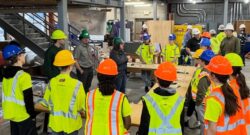
In March, roughly 225 middle schoolers were able to participate in an interactive construction career exploration event hosted by the Keystone chapter of Associated Builders and Contractors (ABC). The three-day, biannual event introduces 75 kids per day to the skilled trades.Throughout the day this spring, students were able to experience carpentry, masonry, electrical, plumbing, excavation, and HVAC at different demo stations. Since there is not a painting station at the event (yet), Brian Fischer, Estimator from Hursh Painting Company, Inc., served as group team leader, ushering the participants to the different stations and answering questions from the young minds.“They got to build a wooden bench, shape metal sheets into toolboxes, build PVC pipe projects, and lay brick,” said Fischer. “They even got to get on a little excavator and pick up a golf ball and drop it in a hole.”“One person asked about the types of weather excavators work in,” he continued. Fischer also reported questions about hours, working year-round, pay, training, and even about the cost of training. “They're a little young, but they're still thinking about what it's going to cost to go to college versus the trades.”“It's a pretty neat event that a lot of local construction participants feel is very important,” added Fischer. He also credited Hursh Painting Company, Inc., as it was a paid day of work for him to participate in the event.“This is just something that is in our company DNA. My father, the founder of Hursh Painting Company, Inc., was always generous with his resources, including paying our employees to work on painting service projects and any other means we could help with in the community when it made sense to do so,” said Phil Hursh, President. “I’m honored to continue that tradition, and we are doing things like this regularly."To learn more about Construction Wars, visit abckeystone.org.To learn more about Hursh Painting Company, Inc., visit hurshpainting.com.
Cherry Coatings Announces Two Acquisitions
Cherry Coatings, a national commercial painting and floor coatings company headquartered in Dallas, Texas, announced two acquisitions in Q1, increasing its local presence to 15 cities across 10 states. Expanding to Oklahoma In January, they announced the acquisition of Masterpiece Painting in Oklahoma. Led by Jeff and Shawn Martin, Masterpiece Painting has built its reputation in the state over many years. “We are proud of the team we’ve built in Oklahoma,” said Jeff Martin. “This partnership with Cherry Coatings gives us the opportunity, through their support, to take on bigger work while keeping the same standards and commitment to our client relationships that got us here.” This strategic move strengthens Cherry Coatings’ presence in the region and brings together two organizations that, they say, share a dedication to craftsmanship, customer service, and building strong relationships in the communities they serve. Masterpiece Painting will operate under the Cherry Coatings name, and the current team members will continue in their roles, with Jeff Martin as the VP of Oklahoma City and Shawn Martin as Preconstruction Manager. “Partnering with Masterpiece Painting allows us to combine their local expertise with our national scale — keeping safety and quality at the forefront of everything we do,” said Zack Cherry, Cherry Coatings CEO. “This collaboration marks an exciting step toward fulfilling our long-term goals.” A Vision for Indianapolis In February, Cherry Coatings announced the acquisition of Vision Painting, noting the Indianapolis company’s integrity and people-first culture, as well as the high-quality commercial, institutional, and multifamily projects that have built Vision’s reputation over the past 25 years. “Our goal is to learn from Vision, come alongside their team, and thoughtfully combine the strengths of both organizations,” said Cherry. “This partnership is built on support and alignment — bringing together our best capabilities to create a unified, high-performing organization.” Vision Painting will operate under its existing name and maintain its leadership team. Cherry Coatings will provide expanded resources, training, and operational support to help Vision grow and pursue new opportunities. “We’re excited to join forces with a company that genuinely shares our values,” said Todd Gates, Chief Operating Officer of Vision Painting. “This partnership allows us to preserve what makes Vision special while gaining the backing of a national leader that believes in investing in people and doing things the right way.” To learn more about Cherry Coatings, visit cherrycoatings.com.
Exponential Growth
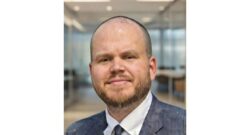
Lee Armstrong is the second-generation owner of Sparkle Painting, a commercial painting contractor serving the Mid-Atlantic. He recently joined the CPIA and sat down with Emily Howard to discuss some of his company’s most exciting projects, the challenges they are prepping for in 2026, and the strategies they’ve used to attract and retain a growing workforce. Emily Howard: Tell us about Sparkle Painting. Lee Armstrong: We are a family-owned business started by my mother and father with the help of my aunt in 1979. I started with the company in 2009 after working for general contractors. I originally thought I would stay on the GC side, but my father helped me see the opportunity in the painting business. Since then, it’s been a pretty fun ride. My father grew the company into a reputable player in the commercial space throughout the Washington, D.C., market, growing the team to 20 to 40 employees. Today, we’ve grown to 400 strong, and we’ve expanded geographically to serve Maryland and Southern Virginia. We’ve done some work in Raleigh as well. EH: What type of work does the company do? LA: We’re known for our larger, more prominent projects. That’s where we feel like we thrive. Some people might know us from jobs like the Amazon HQ2 in Crystal City, Virginia. It’s the largest job we’ve ever completed. We did an eight-year project for the Air and Space Museum, and one for the African American Museum, when that was brand new. I actually got to negotiate with Donald Trump when we did a Trump Hotel, and that was a pretty fun experience. He tried to beat me down 20% on my paint and wall covering number. The fact that he himself found the time to do that was pretty funny. We worked on the second-largest urban development in the nation, called The Wharf, in D.C., and we had a large part in the MGM National Harbor Casino in Maryland. We also do a lot of industrial work. Being in the backyard of Data Center Alley allowed us to be one of the first ones to do a data center project when that became a thing. We’ve built a good name in that space, and that’s where a majority of our work comes from now. EH: How else have you set yourself apart from competitors? LA: Something unique about us is that we’ve grown different verticals, and that we offer more services than a typical painting and wallcovering company. We offer joint sealants and waterproofing. We also do a large amount of industrial flooring, including concrete polishing and resinous flooring, as well as intumescent coatings and fireproofing. Our goal is to be a problem solver. It helps us grow the revenue in the types of work that we like to do. And it helps our customers, because it’s fewer trades to manage, and they have somebody they can trust and count on. EH: As you look to 2026, what are some of the challenges you are preparing for? LA: At this point, 2026 looks like it will be a pretty strong year in the industrial space. We’re finishing up some fun jobs. One is the largest indoor water park in Virginia, called Kalahari Resorts. We’re also finishing up a large manufacturing plant for Lego, which is a really cool job. It will be the second-largest job we’ve ever done as a company. The challenges we see are that, as power and land become scarce in our area, we have to travel more than we used to. A large portion of our revenue and contracts used to come from building in urban settings like D.C., Arlington, and Bethesda, but those areas have never really recovered from the pandemic. Office space has also seen a decline, so we go further into Virginia and the surrounding states. But even with those realities, we see a strong backlog in industrial and tech work, so the future looks good. We’ve been able to grow over 40% last year, and we hope to grow exponentially in the future. EH: How are you dealing with the operational challenges that come with being more spread out geographically? LA: Like many others, one of our biggest challenges is getting enough manpower to continue the growth we’re looking for. Our compensation and benefits packages have brought us a lot of recruiting success. We’re intentional in creating good compensation packages for new employees, and we have significant bonus opportunities for current employees. Being around for 47 years also helps, and we have a lot of employees celebrating 10-, 15-, and 20-year anniversaries. We know we’re fortunate to have people commit their lives to our company, and it’s important to us that we make a good home for them. They give us the responsibility to do right by them, and we take that responsibility seriously. EH: How are you utilizing technology to ease the transition to a more geographically diverse workforce? LA: We definitely rely on technology, are open to new things, and investigate anything that we think can be a big help. Right now, we’re focused on new technologies to make us more efficient on the project management and accounting side. We’re also willing to invest in new technologies and equipment in the field, from different spraying machines to mixing machines to high-tech floor grinding machines. We’re keeping an eye on AI to see how that can change project management, estimating, and anything else. EH: You are a new member of the CPIA. What are you hoping to get out of the group? LA: I initially saw some postings on LinkedIn, and it caught my eye. I’m part of the Young Professionals Organization (YPO), which has some peer groups like the CPIA, and I’ve found growth in that personally and professionally. It’s been great to talk with other trades with similar problems to understand customers, opportunities, and technology that’s out there. Then I thought, what would be better than meeting with people going through the exact same problems as me? Each trade has its own unique set of issues, and I think it will be fun to see how different painting companies are handling things. Welcome Lee!

Key Takeaways from “How AI Search Is Reshaping SEO for Commercial Painters”
AI-powered search is changing the digital visibility of commercial painting contractors. To ensure that CPIA members are up to date on the latest strategies for optimizing both traditional search and AI-powered search, Aaron Hockel of Alta Vista Strategic Partners hosted a webinar for members to shed light on the evolving online landscape.What is the difference between AI search and traditional search? In short, traditional search delivers a list of links, whereas AI-powered searches serve up more conversational, direct answers.The shift in format is not as important as the increasing number of places potential customers can search. Instead of simply optimizing for Google’s algorithm, commercial contractors will have to optimize for multiple AI-platform algorithms as well.Hockel tested results across Google, ChatGPT, Grok, and Gemini, specifically searching “painters near San Diego Airport.” Searches on four platforms resulted in four different lists. Only one company ranked in all four searches.The consistent performer had strong traditional SEO metrics, including high domain authority and significant backlinks. Why does AI search matter to commercial painting contractors?AI platforms are growing exponentially. The good news is that traditional search engines are still commanding more traffic with Google and YouTube in the lead (for now).That said, the younger generation is increasingly turning to ChatGPT over Google. What kind of content should commercial painting contractors publish to rank in AI?Ranking in AI is still relatively new. While no one has the silver bullet, there are some clear patterns.Write FAQs. Because this style of content is easy to parse and summarize, it’s favored by AI. By adding FAQs to service pages, using clear, direct language, and including numbers and price ranges where appropriate, you make it more likely that AI will take notice (note the subheads in this very article).Demonstrating credibility is also extremely important. Hockel recommends using the acronym EEAT — Expertise, Experience, Authoritativeness, Trust — as a guide: Expertise – Include author bioswith credentials and years of experience.Experience – Use project profiles to demonstrate your experience.Authoritativeness – Publish industry recognition, awards, news stories in industry publications, and certifications. Publishing your involvement with industry associations, like the CPIA, can help with authority.Trust – Highlight that you are insured, and bonded, and blog about your safety standards and safety records. Don’t forget your service area. Local business information is important for both traditional and AI search. Setting up local service pages that have examples of projects done in those areas is a great way to highlight the areas where you are active.Make sure your information on the yellowpages.com, 411.com, Bing, Yahoo, and chambers of commerce directories is up to date and consistent. How important are online reviews for commercial painting contractors?Reviews are a major factor in establishing visibility and credibility. AI systems rely heavily on publicly available third-party signals.Commercial clients like GCs, government agencies, and corporations don’t typically leave reviews (some are not permitted to leave reviews); however, that doesn’t matter to AI platforms. The bottom line is that reviews are a major signal to algorithms that your brand is trustworthy, so it’s wise to make a plan to keep those reviews coming in.Let clients know early on that you will request a review once the job is complete. Adding a step to your final walkthrough to ask for the review (you can give them a QR code) is one option, and you can also include review links on invoices and email signatures. Hockel also noted the importance of sending reminders, as they can greatly increase the likelihood that a client will leave a review.When you are asking for reviews, consider that platform diversity matters. Google reviews are still king, but it’s important to get reviews on other platforms as well. Staying Ahead of the CurveIn the end, you want to continue to follow strong SEO practices to ensure that you are not only showing up in traditional search but on the plethora of AI platforms popping up. Investing now in the tactics that help you rank across all search engines is essential to your online marketing success.For more insights and strategies, listen to the full webinar here. Aaron Hockel is a partner at AltaVista Strategic Partners, which specializes in helping commercial contractors stay visible, relevant, and ready to win. Learn more at altavistasp.com.

How AI Search Is Changing How Commercial Painters Get Found
Knowing whether you are compensating employees fairly and competitively is critical to creating an equitable workplace where people want to stay and give their best effort. Supervisors and managers need a baseline understanding of compensation methodology and tools for communicating with their employees, especially when pay is linked to performance. This webinar discusses how employers can develop their compensation strategy and pay structure, so employees can feel confident that their knowledge, skills and performance are valued and rewarded. Presented by Suzi Wear, VP of People Development & Culture; Xenium HR.
Painting Company Helps Schools In Need
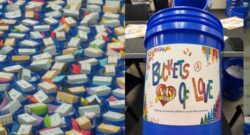
A&K Painting Company wrapped up its 17th year coordinating a massive donation of essential school supplies to local students, schools, and teachers in need. The effort went beyond a simple cash donation as participants dedicated their time to assemble 400 five-gallon supply-filled paint buckets dubbed “Buckets of Love.”Each bucket included roughly $80 worth of school supplies, including pencils, notebooks, glue sticks, highlighters, and more. Two hundred buckets were allocated to Classroom Central, a Charlotte-based nonprofit that provides free resources to teachers and students in need, and the other 200 buckets were distributed to local schools selected by the company. “In our Buckets of Love program, we really just want to show that we’re a family-oriented bunch who cares about our local teachers and kids. It’s all about giving back to the community that’s like family to us,” said President Kevin Robbins. A&K Painting Company is not alone in this venture. Partners and clients joined in by donating to the cause. Sherwin-Williams, for example, provided the buckets and $2,000 for supplies. The project began with a pre-planning phase, during which the donated materials were selected, followed by multiple days of labeling buckets, filling pencil pouches, and presorting stacks, and culminating in a community service day where employees filled all the buckets. The donation program was initiated in 2008 and has steadily gained steam over the years. Two years ago, A&K started its non-profit, A&K Cares, to deepen connection and commitment to the local community and further foster a culture of caring. For information about A&K, visit akpainting.com.