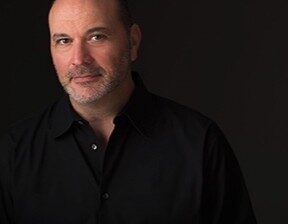
Lee Armstrong is the second-generation owner of Sparkle Painting, a commercial painting contractor serving the Mid-Atlantic. He recently joined the CPIA and sat down with Emily Howard to discuss some of his company’s most exciting projects, the challenges they are prepping for in 2026, and the strategies they’ve used to attract and retain a growing workforce.
Emily Howard: Tell us about Sparkle Painting.
Lee Armstrong: We are a family-owned business started by my mother and father with the help of my aunt in 1979.
I started with the company in 2009 after working for general contractors. I originally thought I would stay on the GC side, but my father helped me see the opportunity in the painting business. Since then, it’s been a pretty fun ride.
My father grew the company into a reputable player in the commercial space throughout the Washington, D.C., market, growing the team to 20 to 40 employees. Today, we’ve grown to 400 strong, and we’ve expanded geographically to serve Maryland and Southern Virginia. We’ve done some work in Raleigh as well.
EH: What type of work does the company do?
LA: We’re known for our larger, more prominent projects. That’s where we feel like we thrive. Some people might know us from jobs like the Amazon HQ2 in Crystal City, Virginia. It’s the largest job we’ve ever completed.
We did an eight-year project for the Air and Space Museum, and one for the African American Museum, when that was brand new.
I actually got to negotiate with Donald Trump when we did a Trump Hotel, and that was a pretty fun experience. He tried to beat me down 20% on my paint and wall covering number. The fact that he himself found the time to do that was pretty funny.
We worked on the second-largest urban development in the nation, called The Wharf, in D.C., and we had a large part in the MGM National Harbor Casino in Maryland.
We also do a lot of industrial work. Being in the backyard of Data Center Alley allowed us to be one of the first ones to do a data center project when that became a thing. We’ve built a good name in that space, and that’s where a majority of our work comes from now.
EH: How else have you set yourself apart from competitors?
LA: Something unique about us is that we’ve grown different verticals, and that we offer more services than a typical painting and wallcovering company.
We offer joint sealants and waterproofing. We also do a large amount of industrial flooring, including concrete polishing and resinous flooring, as well as intumescent coatings and fireproofing.
Our goal is to be a problem solver. It helps us grow the revenue in the types of work that we like to do. And it helps our customers, because it’s fewer trades to manage, and they have somebody they can trust and count on.
EH: As you look to 2026, what are some of the challenges you are preparing for?
LA: At this point, 2026 looks like it will be a pretty strong year in the industrial space. We’re finishing up some fun jobs. One is the largest indoor water park in Virginia, called Kalahari Resorts. We’re also finishing up a large manufacturing plant for Lego, which is a really cool job. It will be the second-largest job we’ve ever done as a company.
The challenges we see are that, as power and land become scarce in our area, we have to travel more than we used to. A large portion of our revenue and contracts used to come from building in urban settings like D.C., Arlington, and Bethesda, but those areas have never really recovered from the pandemic. Office space has also seen a decline, so we go further into Virginia and the surrounding states.
But even with those realities, we see a strong backlog in industrial and tech work, so the future looks good. We’ve been able to grow over 40% last year, and we hope to grow exponentially in the future.
EH: How are you dealing with the operational challenges that come with being more spread out geographically?
LA: Like many others, one of our biggest challenges is getting enough manpower to continue the growth we’re looking for. Our compensation and benefits packages have brought us a lot of recruiting success. We’re intentional in creating good compensation packages for new employees, and we have significant bonus opportunities for current employees.
Being around for 47 years also helps, and we have a lot of employees celebrating 10-, 15-, and 20-year anniversaries. We know we’re fortunate to have people commit their lives to our company, and it’s important to us that we make a good home for them. They give us the responsibility to do right by them, and we take that responsibility seriously.
EH: How are you utilizing technology to ease the transition to a more geographically diverse workforce?
LA: We definitely rely on technology, are open to new things, and investigate anything that we think can be a big help. Right now, we’re focused on new technologies to make us more efficient on the project management and accounting side.
We’re also willing to invest in new technologies and equipment in the field, from different spraying machines to mixing machines to high-tech floor grinding machines.
We’re keeping an eye on AI to see how that can change project management, estimating, and anything else.
EH: You are a new member of the CPIA. What are you hoping to get out of the group?
LA: I initially saw some postings on LinkedIn, and it caught my eye. I’m part of the Young Professionals Organization (YPO), which has some peer groups like the CPIA, and I’ve found growth in that personally and professionally.
It’s been great to talk with other trades with similar problems to understand customers, opportunities, and technology that’s out there. Then I thought, what would be better than meeting with people going through the exact same problems as me? Each trade has its own unique set of issues, and I think it will be fun to see how different painting companies are handling things.
Welcome Lee!